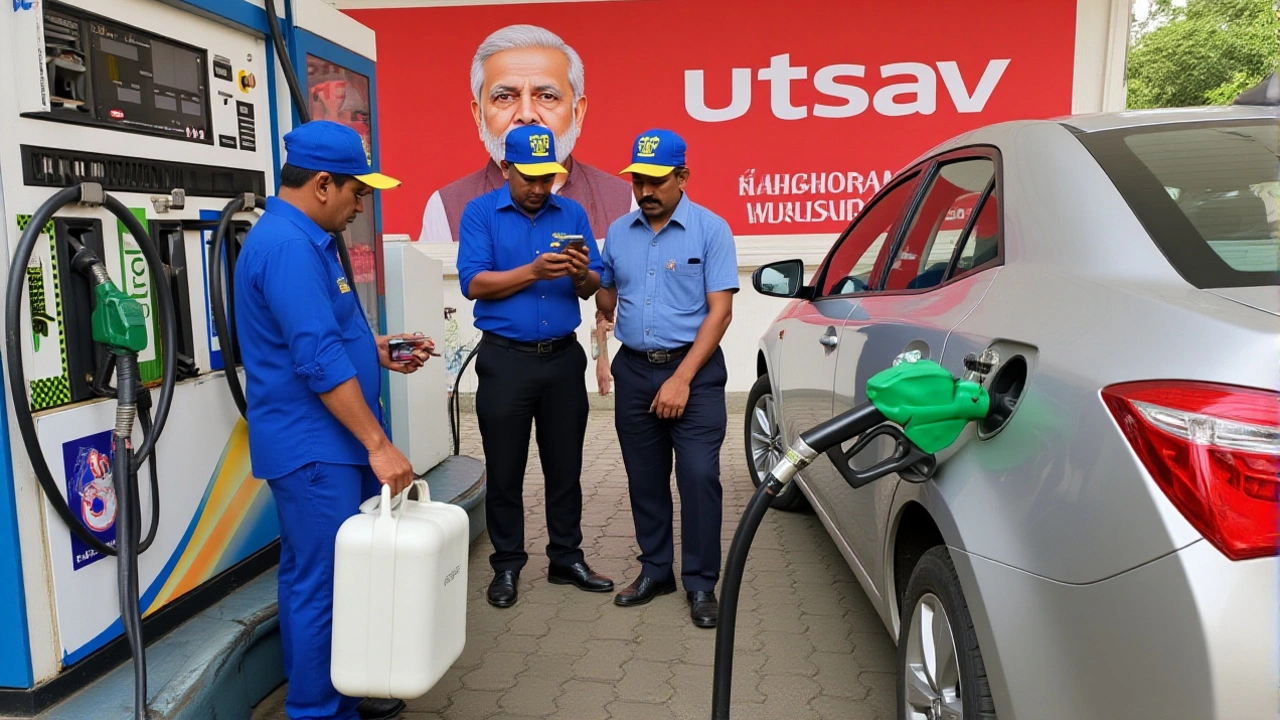
When Narendra Modi, Prime Minister of India, watches the political storm brew around rising fuel costs, the rhetoric is heating up faster than a summer engine. Petrol prices in several Indian cities have crossed the psychological barrier of ₹118 per litre, triggering a fierce blame game between the ruling Bharatiya Janata Party (BJP) and the opposition Indian National Congress.
The twist? It’s not just about the pump price—it’s about who gets to keep the money. While central excise duties remain uniform across the country, state governments add their own VAT and other levies, creating a patchwork of prices that politicians are now weaponizing.
The Political Blame Game Intensifies
Here’s the thing: fuel prices don’t exist in a vacuum. They’re tied directly to government revenue strategies. According to reports from Samriddha Jharkhand, the BJP has launched a coordinated attack on Congress-ruled states, claiming they charge significantly higher rates for petrol and diesel compared to BJP-governed regions.
The party’s argument is straightforward but politically charged. Since the central excise duty remains constant nationwide, any price difference must stem from state-level taxation. The BJP argues that Congress-led state governments are exploiting this system to extract extra revenue from citizens, effectively taxing them more heavily at the pump.
But wait—Congress isn’t sitting idly by. In Karnataka, where the Congress party holds state power, leaders have fired back with accusations of their own. On Monday, following record-high fuel prices in Bengaluru, the state government accused the Central Government led by Prime Minister Narendra Modi and the national BJP leadership of orchestrating an “energy looting” scheme.
This isn’t just semantic sparring. These accusations carry weight because they touch raw nerves—every rupee added to fuel costs impacts transportation, logistics, food prices, and daily commutes for millions of Indians.
Bengaluru Breaks Records Amid Rising Tensions
In Bengaluru, the capital of Karnataka, petrol and diesel prices recently shattered historical records. The surge prompted immediate political fallout. State Congress leaders demanded a rollback of recent price increases, pointing fingers squarely at New Delhi.
According to Navbharat Times, the Karnataka Congress issued statements condemning what it described as systematic exploitation through pricing structures. The term “fuel loot” became a rallying cry in local media coverage, reflecting growing public frustration.
What makes Bengaluru particularly significant here? As India’s tech hub and one of its most populous metropolitan areas, even small fluctuations in fuel costs ripple outward quickly. Commuters face longer waits at pumps; delivery services raise fees; consumers feel the pinch immediately.
Interestingly enough, while exact figures weren’t always disclosed in initial reports, industry analysts note that when retail prices cross ₹118/litre, consumer sentiment shifts dramatically. People start questioning whether inflation is under control—or if governments are prioritizing revenue over relief.
Who Pays More? Comparing State Tax Policies
Let’s break down how these disparities emerge. Fuel pricing in India follows a layered structure:
- Base Crude Cost: Determined globally, fluctuates daily based on international markets.
- Central Excise Duty: Fixed nationally by the Union Finance Ministry.
- VAT & State Levies: Varies widely depending on each state’s fiscal policy.
- Dealer Commission: Standardized margin paid to retailers.
So why does petrol cost ₹105 in one city and ₹125 in another nearby? Because states set different VAT percentages. Some impose additional surcharges or environmental cesses. Others offer temporary subsidies during election cycles.
A popular YouTube discussion show titled Aar Paar With Amish Devgan highlighted this very issue, asking viewers: “Which state imposes the highest tax on oil?” Though specific numbers weren’t provided in available transcripts, the segment underscored how deeply entrenched regional differences have become—and how easily they can be politicized.
Experts suggest comparing actual tax burdens requires looking beyond headline prices. For instance, Maharashtra might appear expensive due to high VAT, yet Gujarat could offset lower base rates with fewer concessions elsewhere. Without standardized reporting, apples-to-apples comparisons remain elusive.
Public Reaction and Economic Impact
Turns out, ordinary citizens aren’t waiting for parliamentary debates—they’re feeling the impact right now. Social media platforms lit up after news broke about Bengaluru’s record prices. Hashtags like #FuelCrisisIndia trended briefly, showing widespread concern among urban professionals and rural transport operators alike.
Small business owners report cutting hours to save on generator fuel. Auto-rickshaw drivers complain about reduced earnings despite fare hikes being capped locally. Even middle-class families adjust grocery shopping habits, avoiding bulky items that require costly transport.
Oddly enough, there’s little consensus among economists about optimal solutions. Some argue reducing indirect taxes would stimulate demand temporarily. Others warn against sudden cuts without addressing structural inefficiencies in distribution networks.
One expert opinion shared during televised panels noted that sustained high prices often correlate with broader macroeconomic instability—not merely partisan maneuvering. When crude oil spikes globally, domestic policies matter less unless accompanied by targeted relief measures.
What Comes Next? Policy Shifts Underway?
The details are still unclear regarding concrete legislative changes. However, both major parties signal readiness to act—if doing so yields electoral advantage. Ahead of upcoming assembly elections in multiple states, expect intensified scrutiny of fuel pricing mechanisms.
Watch for potential moves including:
- State-level VAT reductions announced ahead of polling dates.
- Federal interventions via subsidy programs aimed at vulnerable sectors.
- New transparency mandates requiring real-time publication of component breakdowns.
If history repeats itself, we’ll see short-term fixes rather than long-term reforms. But pressure mounts whenever prices breach symbolic thresholds like ₹118. Politicians know voters remember pain points vividly—even years later.
Background: How We Got Here
To understand today’s controversy, consider past precedents. During previous administrations, similar controversies erupted whenever global crude surged above $70/barrel. Each time, opposition parties blamed incumbent regimes for inadequate planning.
In 2022, following Russia-Ukraine conflict disruptions, many countries saw unprecedented volatility. India responded partly through strategic petroleum reserves deployment—but also allowed market forces to dictate much of the adjustment process.
Since then, periodic adjustments occurred quietly until current levels triggered renewed outrage. Unlike earlier episodes, social amplification accelerates reaction times today. Within hours of new data emerging, viral posts frame narratives before official responses materialize.
Historically speaking, fuel affordability serves as barometer for economic health perceptions. High prices erode confidence regardless of underlying fundamentals. That’s why every percentage point matters politically.
Frequently Asked Questions
Why do petrol prices vary so much between Indian states?
While central excise duties apply uniformly nationwide, individual states impose varying Value Added Taxes (VAT) and supplementary levies on petroleum products. This creates substantial regional discrepancies. For example, Kerala typically charges higher VAT than Rajasthan, resulting in noticeably different final retail prices despite identical base components.
Is the BJP correct that Congress states charge more for fuel?
Data suggests general trends support this claim, though exceptions exist. Several Congress-administered regions—including Punjab, West Bengal, and parts of South India—have historically maintained elevated tax structures relative to BJP-controlled counterparts. Nevertheless, precise calculations depend on current monthly revisions and special exemptions granted seasonally.
What exactly did Karnataka Congress mean by 'fuel looting'?
The phrase refers metaphorically to perceived excessive taxation benefiting central coffers disproportionately. Specifically, Karnataka officials alleged that combined federal-state charges exceed reasonable thresholds necessary for infrastructure development alone. Critics counter that such language oversimplifies complex budgetary requirements involving defense spending and debt servicing obligations.
Will petrol prices drop soon?
Short-term predictions hinge primarily on Brent crude futures performance alongside rupee-dollar exchange rate stability. If international benchmarks stabilize below $80/barrel range, modest decreases likely follow within weeks. Conversely, geopolitical tensions elsewhere could sustain upward momentum indefinitely. Domestic policy decisions play secondary role unless deliberately engineered downward adjustments occur.
How does this affect common commuters?
Direct impacts include increased commuting expenses forcing lifestyle compromises. Indirect effects manifest through inflated commodity prices since logistics costs rise proportionally with diesel expenditures. Over extended periods, persistent affordability challenges may influence migration patterns away from metropolitan centers toward cheaper alternatives further inland.