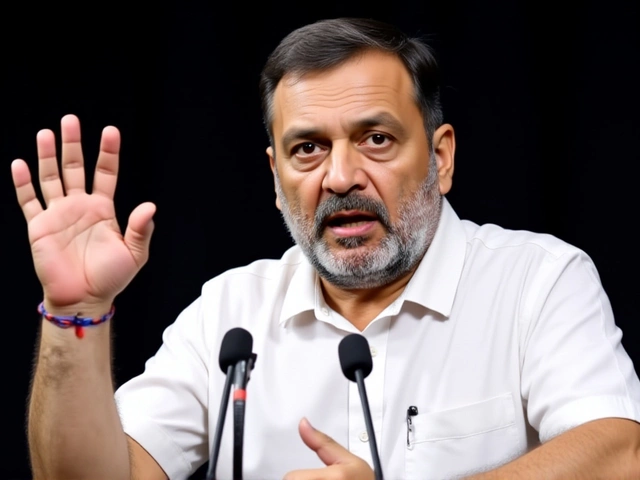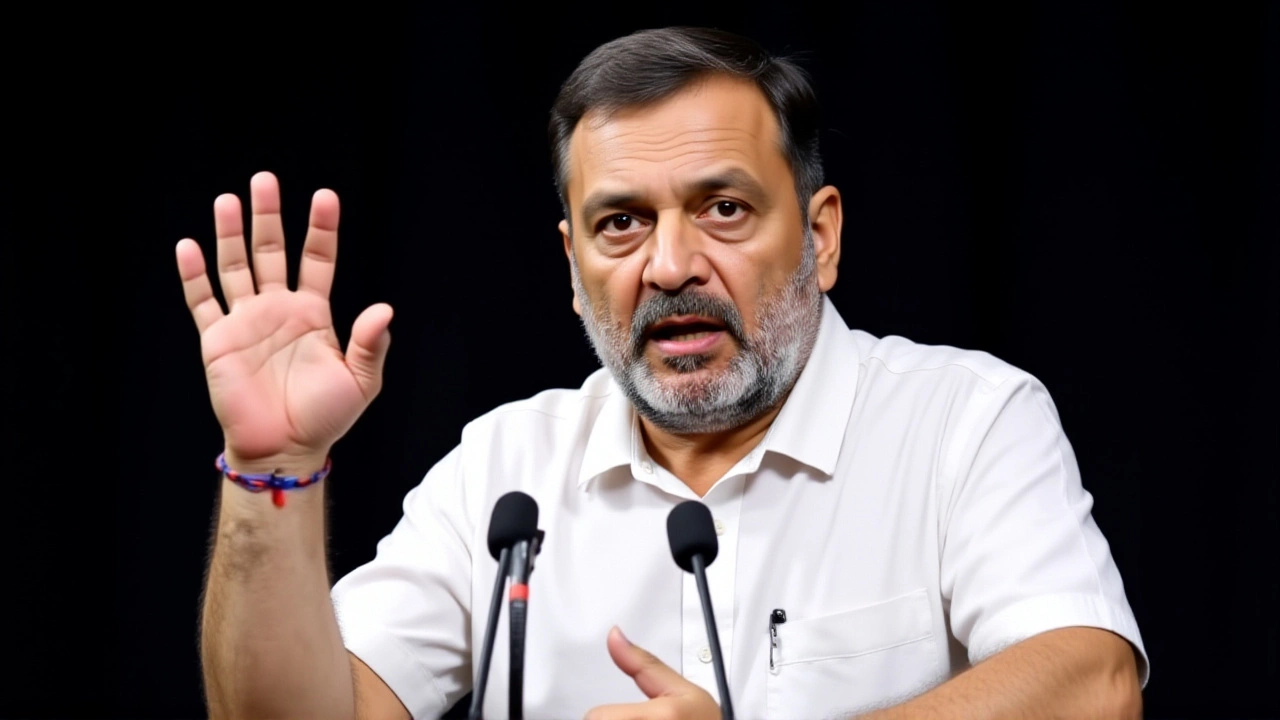
The corridors of the Central Board of Secondary Education (CBSE) were thrown into chaos on Wednesday, May 27, 2026. Opposition leader Rahul Gandhi, Leader of Opposition in Lok Sabha stood up in Parliament to level a staggering accusation: widespread manipulation in the board exam results. He claimed that the futures of 1.85 million students had been compromised by a "conspiracy" involving a private vendor. The board responded within hours, calling the allegations "erroneous, misleading, and not based on facts."
Here’s the thing: this isn’t just another political spat. It strikes at the heart of trust in India’s most critical academic examination system. For millions of parents and teenagers, these marks determine college admissions and career paths. When someone as prominent as Gandhi claims tampering, panic spreads instantly.
The Accusation: A 'Conspiracy' Against Students?
Gandhi didn’t mince words. In a fiery address, he argued that the digital evaluation process for the 2026 exams was flawed beyond repair. He pointed specifically to Coempt Edutech, a Hyderabad-based firm hired for digital marking. According to Gandhi, awarding the contract to this company—whom he described as having a "dark history"—was an act of negligence or worse.
"This is not a mistake," Gandhi declared. "It is a calculated conspiracy." He urged the government to set up a Special Investigation Team (SIT) and a judicial commission to probe the matter. His rhetoric was sharp, accusing the Narendra Modi-led Central Government of showing "no accountability, no responsibility, no shame."
The core of his argument rested on two pillars: first, that Coempt Edutech was unfit due to past controversies (though specific details of prior scandals were not elaborated in his initial statement); and second, that the On-Screen Marking (OSM) system led to significant score discrepancies for many students. He demanded an immediate switch back to manual re-evaluation by neutral human examiners.
CBSE’s Firm Rebuttal
The board didn’t wait long to push back. Later that same day, CBSE issued an official statement denying every charge. They emphasized that the selection of Coempt Edutech followed strict protocols under the General Financial Rules (GFR).
"The entire process of awarding the contract to the agency has been carried out in full compliance with the General Financial Rules," the statement read. The board noted that they had issued a Request for Proposal (RFP) on August 28, 2025, via the Central Public Procurement Portal. From there, the bidding process proceeded transparently, leading to the selection of a qualified bidder.
Oddly enough, while Gandhi painted a picture of chaos, the board insisted everything was by the book. They rejected the characterization of Coempt Edutech as tainted, stating firmly that the allegations were baseless. This creates a stark divide: one side sees a rigged system; the other sees standard procedure executed correctly.

Real Stories Behind the Statistics
Behind the political posturing are real students facing real anxiety. One case highlighted in media reports involves Vedant Srivastav. Initially, Vedant received 65 marks in Physics. After a review—triggered by concerns over answer sheet mismatches—his score was revised upward to 74. This bump pushed his overall percentage from 74% to over 75%.
Turns out, cases like Vedant’s fuel the fire. Parents argue that if one student can gain nearly 10 marks through re-checking, how many others lost out? Gandhi used such instances to illustrate systemic failure, suggesting that thousands might have suffered similar losses due to digital errors or bias in the OSM system.
Government Response and Political Fallout
The political stakes are high. By May 28, 2026, Union Education Minister Dharmendra Pradhan weighed in. While the exact text of his response wasn't fully detailed in early reports, his intervention signaled that the central government takes the allegations seriously—or at least needs to manage the fallout.
The Indian National Congress has mobilized around this issue, positioning itself as the defender of students’ rights. Their social media campaigns highlight the distress of families, framing the dispute as a battle between corporate interests and educational integrity. Meanwhile, supporters of the ruling party point to the legal tender process as proof of transparency.
Key Timeline of Events
- August 28, 2025: CBSE issues RFP for digital evaluation services.
- Early 2026: Coempt Edutech wins contract; exams conducted.
- May 27, 2026: Rahul Gandhi alleges manipulation in Lok Sabha; demands SIT.
- May 27, 2026: CBSE denies allegations, cites GFR compliance.
- May 28, 2026: Education Minister Dharmendra Pradhan responds to claims.

What Does This Mean for Students?
For now, uncertainty reigns. Thousands of students are waiting to see if their scores will be re-examined. The demand for manual re-evaluation is gaining traction among parent groups. If the government agrees to a probe, it could delay admission processes for universities across the country.
Experts suggest that regardless of who is right, the debate highlights vulnerabilities in digital assessment systems. As more boards move toward tech-driven evaluations, questions about security, accuracy, and fairness will only grow louder. The next few weeks will be crucial in determining whether this remains a political footnote or triggers a major overhaul of India’s examination infrastructure.
Frequently Asked Questions
Who is Coempt Edutech and why are they controversial?
Coempt Edutech is a Hyderabad-based private company hired by CBSE for the digital evaluation of 2026 board exams. Controversy arose when opposition leaders alleged the firm had a "dark history" and was improperly selected, though CBSE maintains the hiring followed all General Financial Rules and public procurement protocols.
What exactly did Rahul Gandhi accuse the government of?
Rahul Gandhi accused the central government and CBSE of orchestrating a "conspiracy" to manipulate exam results. He claimed that outsourcing marking to Coempt Edutech compromised the integrity of the exams for 1.85 million students and demanded a Special Investigation Team (SIT) to probe the matter.
How did CBSE respond to the allegations?
CBSE issued a strong denial on May 27, 2026, calling the allegations "erroneous, misleading, and not based on facts." The board stated that the contract award process was transparent, compliant with General Financial Rules, and initiated via a public Request for Proposal in August 2025.
Are students getting their scores re-checked?
While CBSE has not announced a blanket re-evaluation, individual cases like that of Vedant Srivastav show scores being corrected after reviews. Opposition parties are demanding a complete shift to manual re-checking, but no official decision on mass re-evaluation has been made yet.
What is the role of the Special Investigation Team (SIT)?
An SIT is a specialized law enforcement unit often formed to investigate complex crimes or corruption. Rahul Gandhi demanded its creation to independently investigate alleged irregularities in the CBSE exam process. As of late May 2026, the government has not confirmed the formation of such a team.